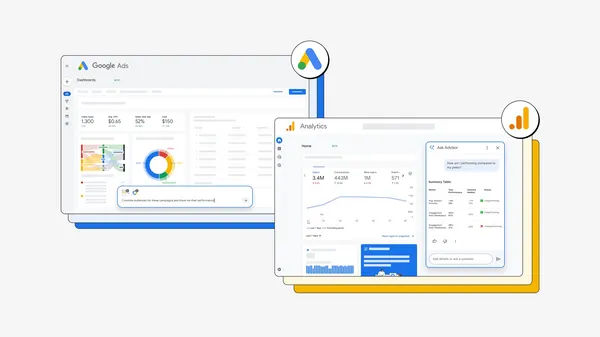
Celebrating 25 years of visual search innovation
Google Images is turning 25. Here’s a look back at some major milestones — and new ways to explore and create visual content. ​Â
Celebrating 25 years of visual search innovation Read More »
Google Images is turning 25. Here’s a look back at some major milestones — and new ways to explore and create visual content. ​Â
Celebrating 25 years of visual search innovation Read More »
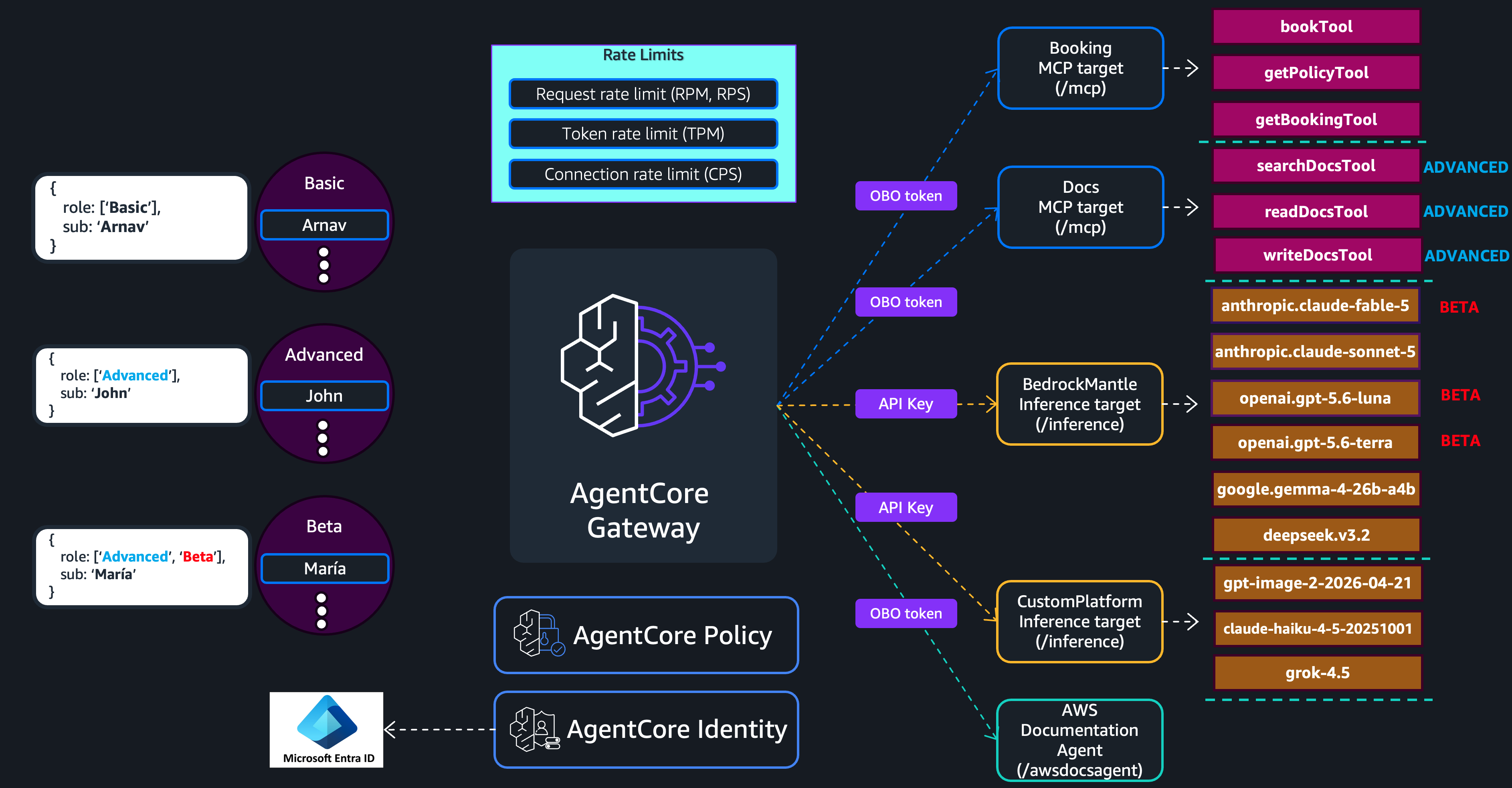
Build with the smartest family of models from OpenAI yet, on Amazon Bedrock’s next-generation inference engine. Organizations scaling autonomous agents and AI-powered products need frontier intelligence that performs reliably across hundreds of steps, from coding agents shipping production code to cyber security research probing novel attack surfaces to genomics workflows analyzing entire gene sequences end-to-end.
OpenAI GPT-5.6 Sol, Terra, and Luna are now generally available on Amazon Bedrock Read More »
AI as accessibility: what happened when a neurodivergent solutions architect stopped fighting his brain and started building. In this post, I share how AI serves as an accessibility tool for neurodivergent professionals. The system is built on Amazon Quick on your desktop, an AI-powered desktop and web assistant that compensates for executive function gaps every
When your brain works differently, AI isn’t a luxury—it’s accessibility Read More »
This post is co-written with Vijay Venkatesh, CTO at Bluesight. If you build software for hospitals, you know that compliance work scales poorly. Hospitals managing 340B Drug Pricing Program compliance face a compounding data problem. Proving that a Group Purchasing Organization (GPO) purchased drug qualifies for an exception requires cross-referencing each purchase against several sources
Building an agentic AI solution at Bluesight with Amazon Bedrock Read More »
When you deploy generative AI agents into multi-tenant production architectures, you face a specific identity problem: when an agent calls a downstream API on behalf of a user, whose identity travels with the call? Running the call as the agent’s service identity collapses the audit trail, because every downstream system must trust the agent unconditionally.
Deploying generative AI models to production requires finding the right combination of instance type, serving container with settings, and optimization strategy. This process typically requires a long iteration cycle of optimization and manual benchmarking. In April 2026, Amazon SageMaker AI launched this inference recommendations, so customers can programmatically get data-driven, production-ready configurations through APIs. This
Launching UI for generative AI inference recommendations in Amazon SageMaker AI Read More »
Model customization transforms general-purpose AI models into specialized enterprise assets. By fine-tuning foundation models (FMs) on domain-specific data, businesses teach AI their unique workflows, terminology, and deep domain specialization, along with strict adherence to brand voice and fewer hallucinations. For enterprises, this is more than an optimization. It’s the creation of proprietary intellectual property. A
In dentistry, image quality determines whether a claim is paid or denied. Up to 20 percent insurance claims are initially denied, with missing or low-quality images among the leading causes. Yet quality assessment has traditionally been a manual, after-the-fact process. A clinician reviews an X-ray hours or days after capture, discovering problems only when a
Real-time dental image verification with Amazon SageMaker AI at Henry Schein One Read More »
In this post we show how to build a semantic layer on AWS using Stardog’s Semantic AI Application over Amazon Aurora and Amazon Redshift, and how to run a Strands Agents agent on Amazon Bedrock AgentCore that queries the layer to answer customer 360 questions across both sources without extract, transform, and load (ETL). The
Build a semantic layer for agentic AI on AWS with Stardog and Amazon Bedrock AgentCore Read More »
An artificial intelligence (AI) agent can process an invoice, help adjudicate a claim, or classify a support ticket in a proof of concept. But running these agents across thousands or even millions of work items in a production environment introduces an entirely different set of challenges. At enterprise scale, success depends on much more than
Scaling agentic workflows with native case management in Amazon Quick Automate Read More »