Blog_dumb

Govern models with MLflow and Amazon SageMaker AI Model Registry sync: Part 2

Govern models with MLflow and Amazon SageMaker AI Model Registry sync: Part 2

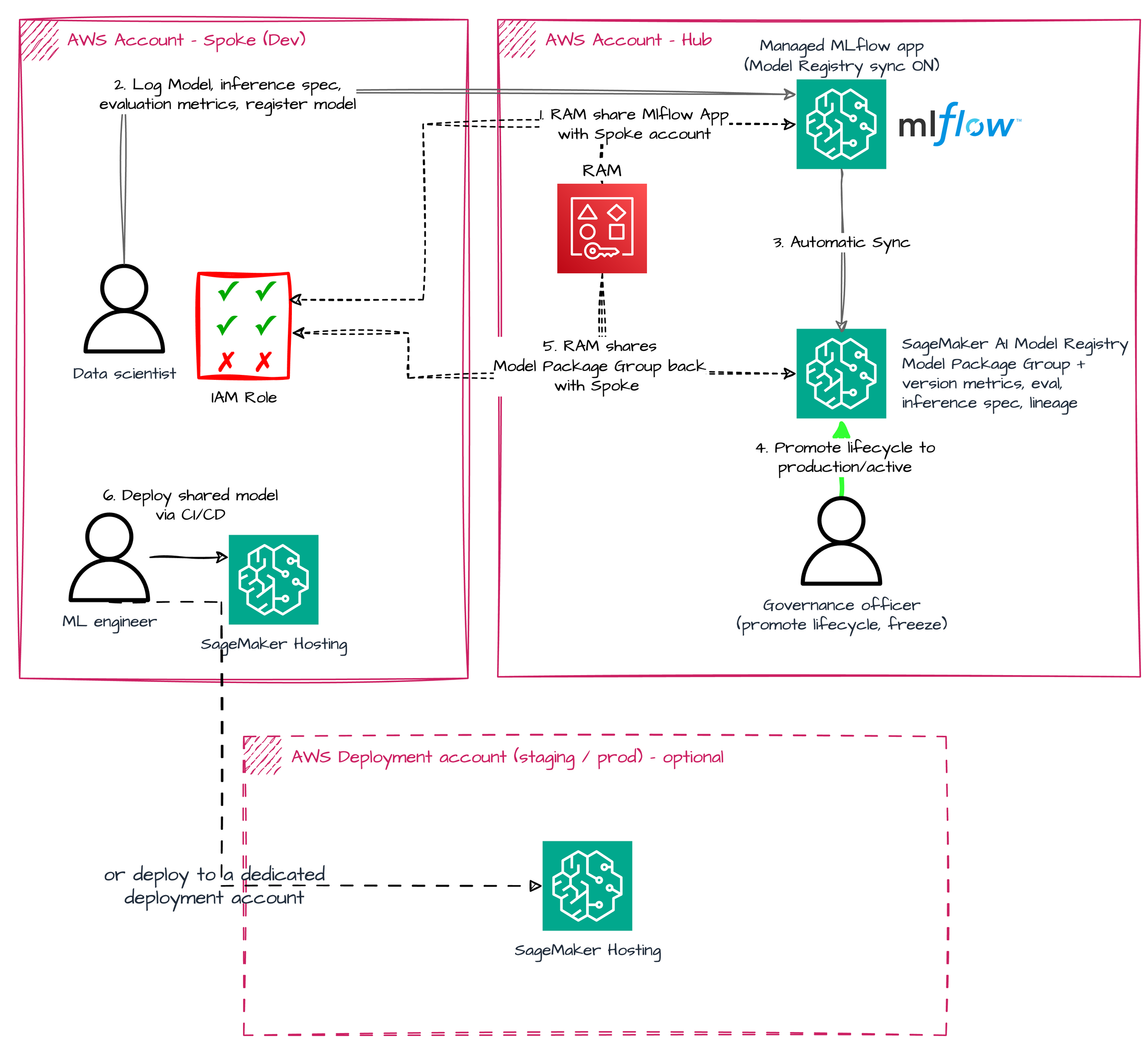
Governing models across accounts is the natural next step once automatic model registration is in place. In Part 1 we introduced how managed MLflow on Amazon SageMaker AI synchronizes registered models into the SageMaker AI Model Registry. We walked through a single-account setup where AWS Identity and Access Management (IAM) condition keys separate the data […]

Govern models with MLflow and Amazon SageMaker AI Model Registry sync: Part 2 Read More »
Govern models with MLflow and Amazon SageMaker AI Model Registry sync: Part 1

Govern models with MLflow and Amazon SageMaker AI Model Registry sync: Part 1

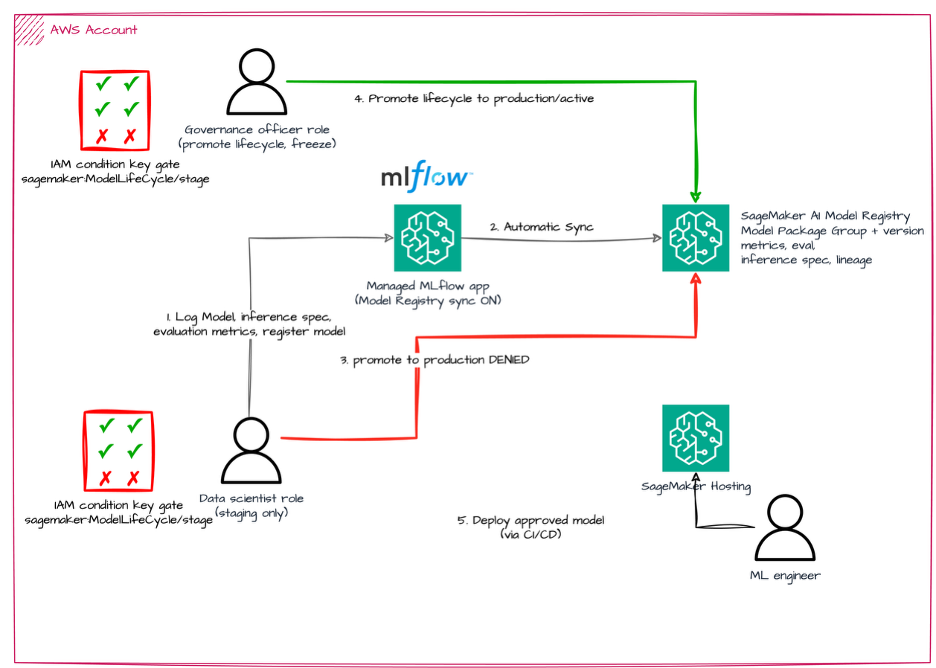
Automating model registration between MLflow and a model registry solves a gap that opens the moment a candidate model leaves experimentation. Data scientists track dozens of candidate runs in MLflow, while governance officers need one authoritative registry to validate, approve, and audit the models that reach production. Managed MLflow on Amazon SageMaker AI already synchronizes

Govern models with MLflow and Amazon SageMaker AI Model Registry sync: Part 1 Read More »

Automated agent evaluation with Amazon Bedrock AgentCore and GitHub Actions

Automated agent evaluation with Amazon Bedrock AgentCore and GitHub Actions

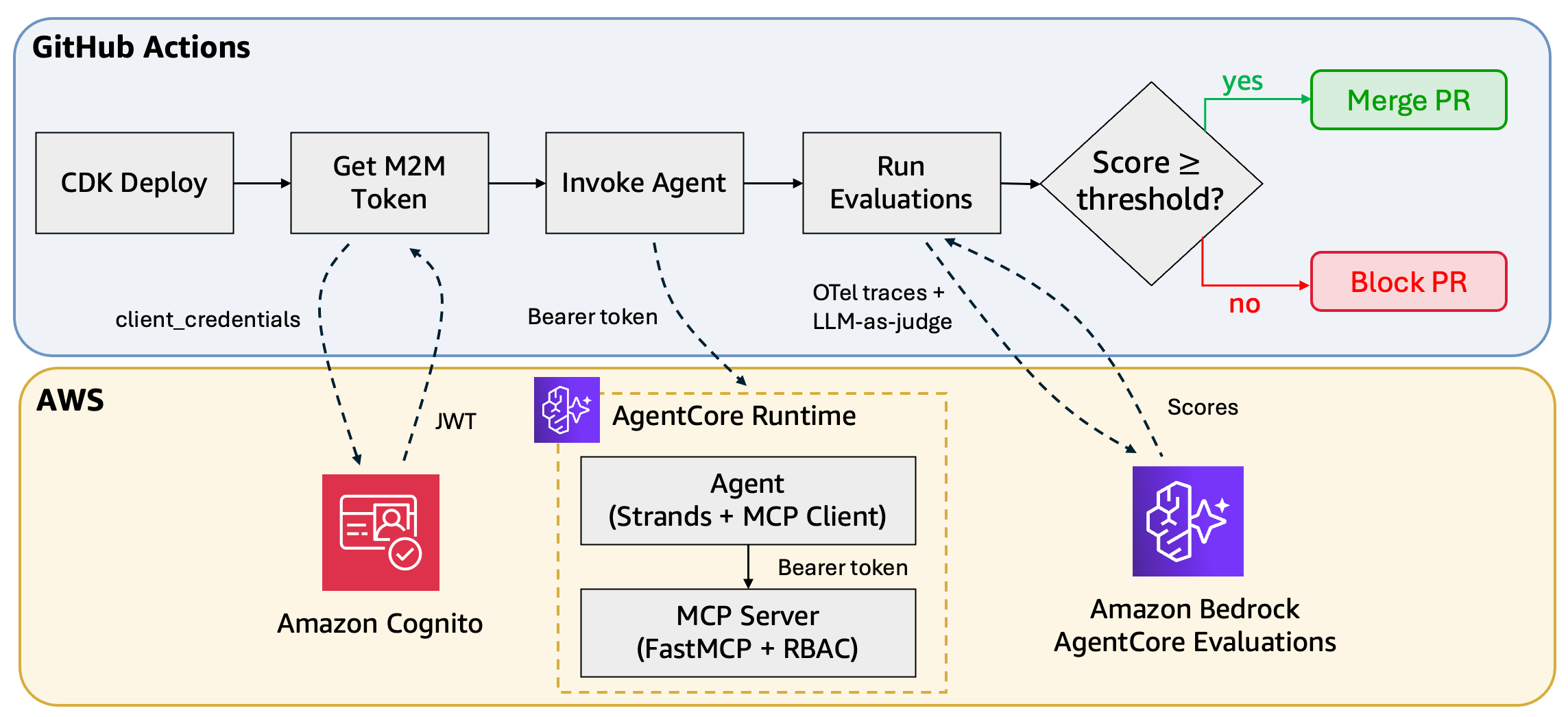
Build a continuous integration and continuous delivery (CI/CD) quality gate that deploys an agent with role-based MCP tools, evaluates it, and blocks PRs when evaluation scores drop. You shipped an AI agent on Amazon Bedrock AgentCore runtime. It calls tools through an MCP server protected by OAuth. Now you want CI to tell you when

Automated agent evaluation with Amazon Bedrock AgentCore and GitHub Actions Read More »

Benchmarking small LLM inference on SageMaker AI: G7 vs G5 and G6

Benchmarking small LLM inference on SageMaker AI: G7 vs G5 and G6

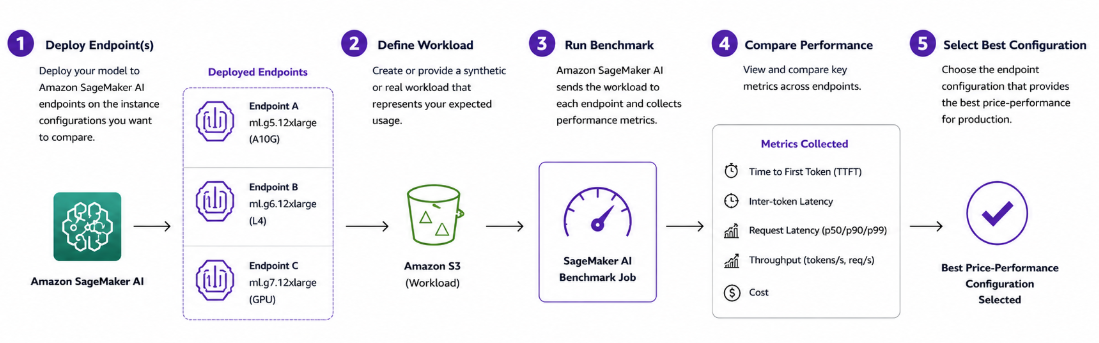
Choosing the right GPU instance for large language model (LLM) inference is one of the most impactful decisions you make when deploying generative AI at scale. A single generation jump can slash latency, increase throughput, and reduce cost-per-token. However, the real-world magnitude of those gains depends on model architecture, quantization format, and workload shape. In

Benchmarking small LLM inference on SageMaker AI: G7 vs G5 and G6 Read More »

How HPE Zerto built an agentic troubleshooting system with Amazon Bedrock

How HPE Zerto built an agentic troubleshooting system with Amazon Bedrock

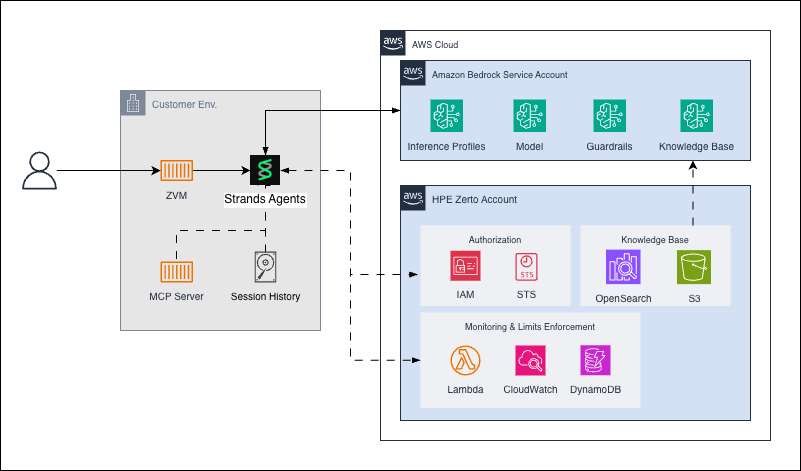
This post was co-written by AWS and the HPE Zerto team. If you manage hybrid and multi-cloud infrastructures, you may already be turning to AI systems to assess health, investigate issues, and act on problems faster. HPE Zerto addressed this challenge by building an agentic troubleshooting system powered by Amazon Bedrock. HPE Zerto Software helps

How HPE Zerto built an agentic troubleshooting system with Amazon Bedrock Read More »

How DiDi built intelligent contact center QA with Amazon Bedrock

How DiDi built intelligent contact center QA with Amazon Bedrock

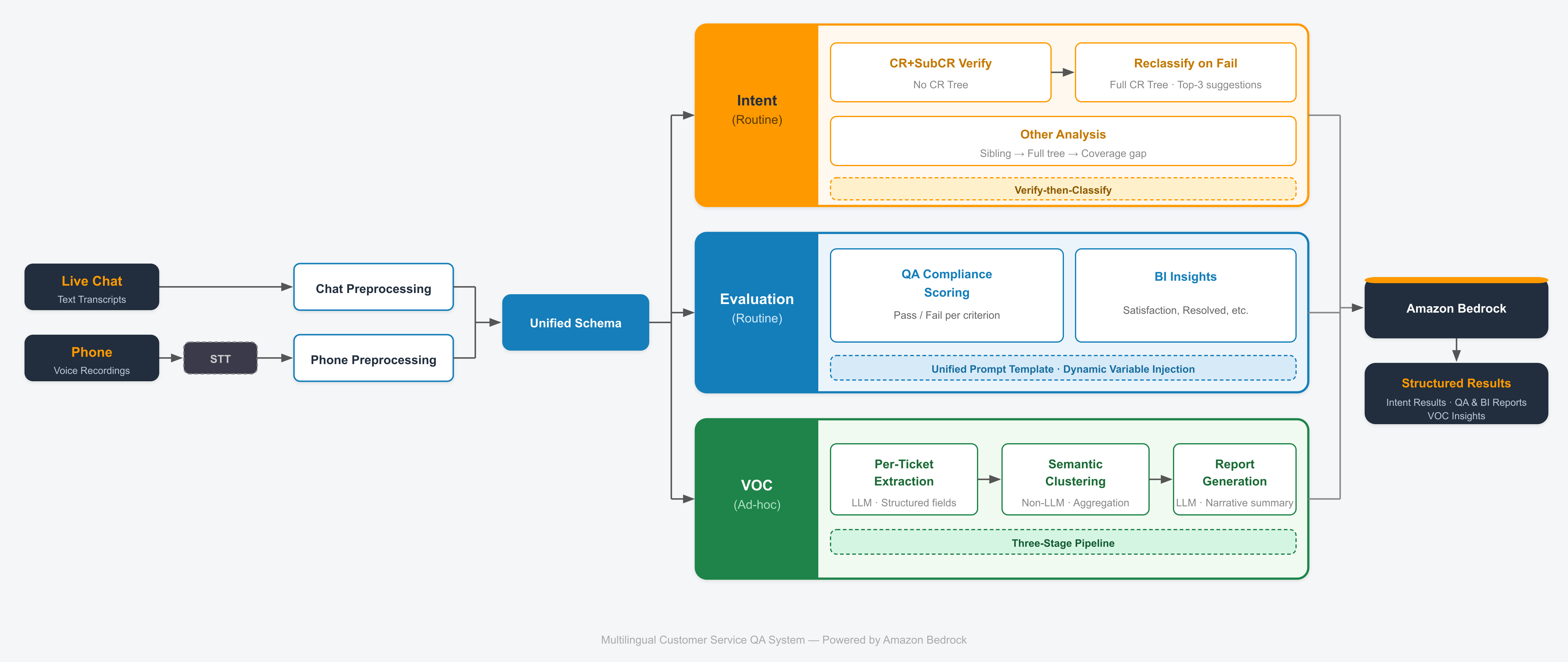
DiDi partnered with AWS to build an intelligent contact center quality assurance (QA) system on Amazon Bedrock for its International Business Group’s Customer Experience (CX) department. The system covers Spanish and Portuguese across three business lines (ride-hailing, food delivery, and financial services) and migrates QA capabilities from an opaque third-party solution to a transparent, self-owned

How DiDi built intelligent contact center QA with Amazon Bedrock Read More »

Deploy a multimodal WhatsApp ordering assistant with Amazon Bedrock AgentCore

Deploy a multimodal WhatsApp ordering assistant with Amazon Bedrock AgentCore

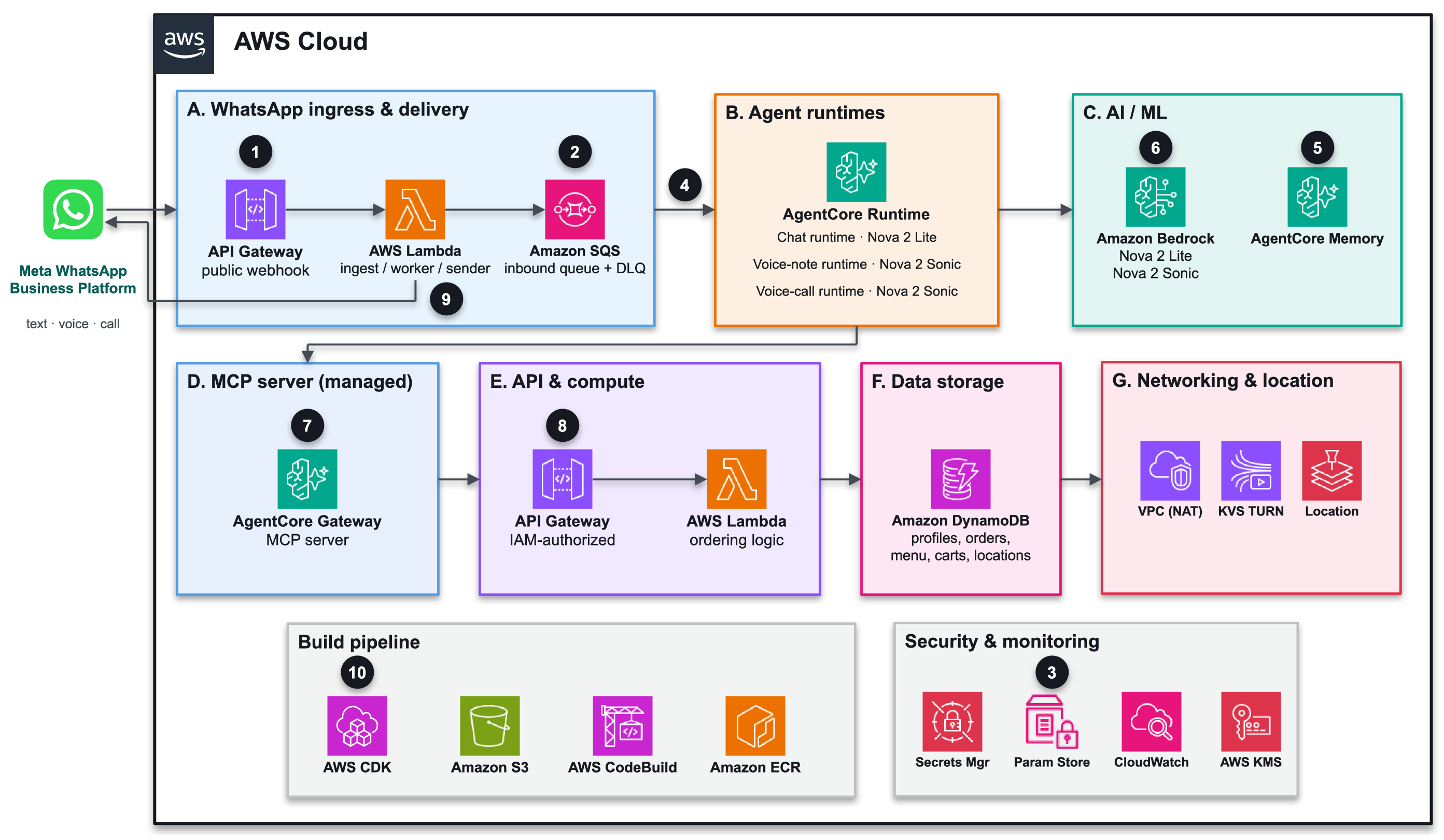
This post shows how to deploy a multimodal WhatsApp ordering assistant built with Amazon Bedrock AgentCore and Amazon Nova 2. Many quick-service restaurants spread ordering across an app, a website, a phone line, and the counter. Each of those is a separate system to build and run. Each one also fragments the customer’s history, making

Deploy a multimodal WhatsApp ordering assistant with Amazon Bedrock AgentCore Read More »

Designing lifecycle policies for AgentCore memory

Designing lifecycle policies for AgentCore memory

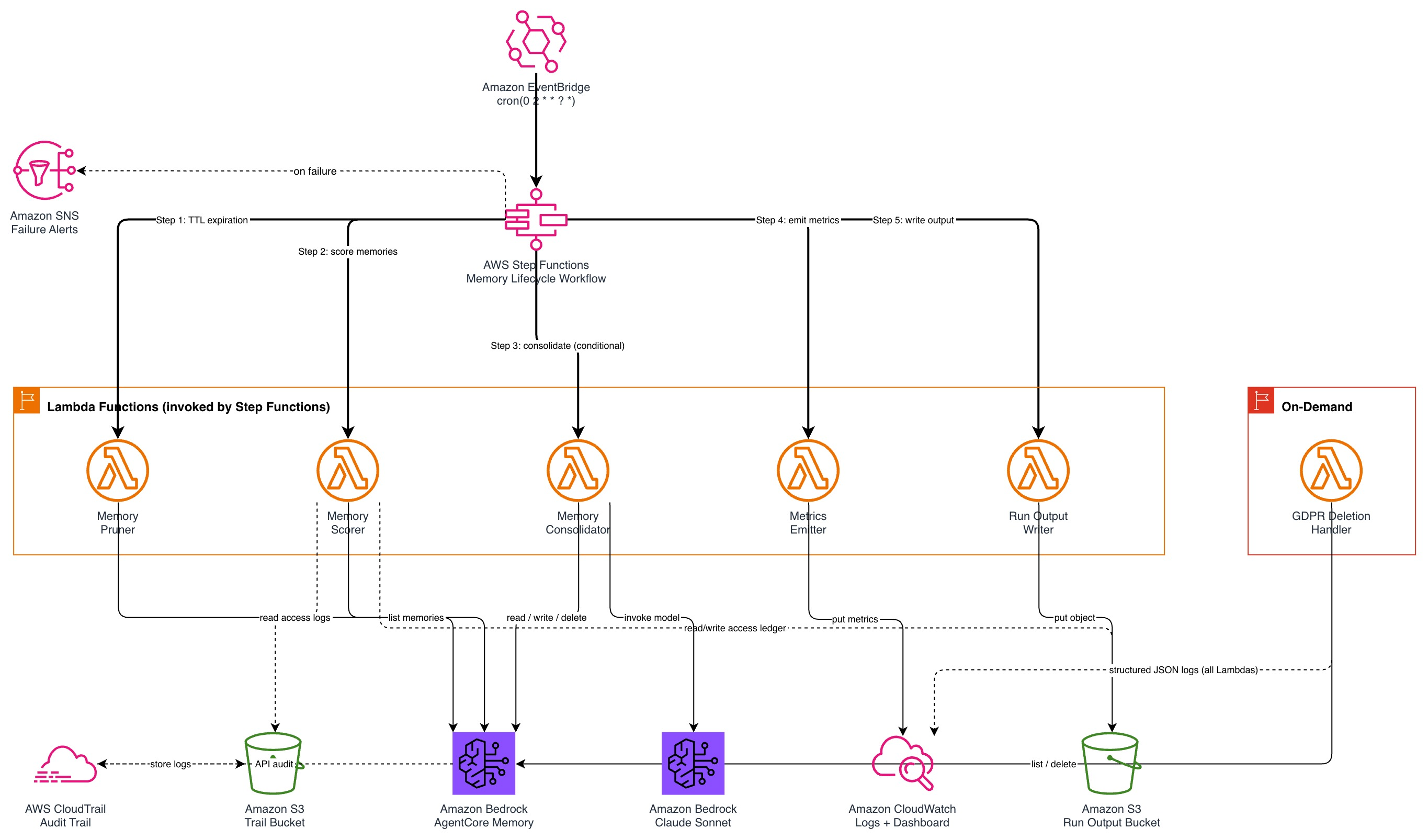
Memory lifecycle policies help long-running agents on Amazon Bedrock AgentCore stay effective by systematically managing what they remember and forget. Your agent generates memories from every conversation it conducts. If you don’t actively manage these memories, your agents will accumulate outdated context, which can degrade response quality and create compliance risks for your deployment. After

Designing lifecycle policies for AgentCore memory Read More »

Build a Physical AI model factory with NVIDIA Cosmos 3 on SageMaker HyperPod

Build a Physical AI model factory with NVIDIA Cosmos 3 on SageMaker HyperPod

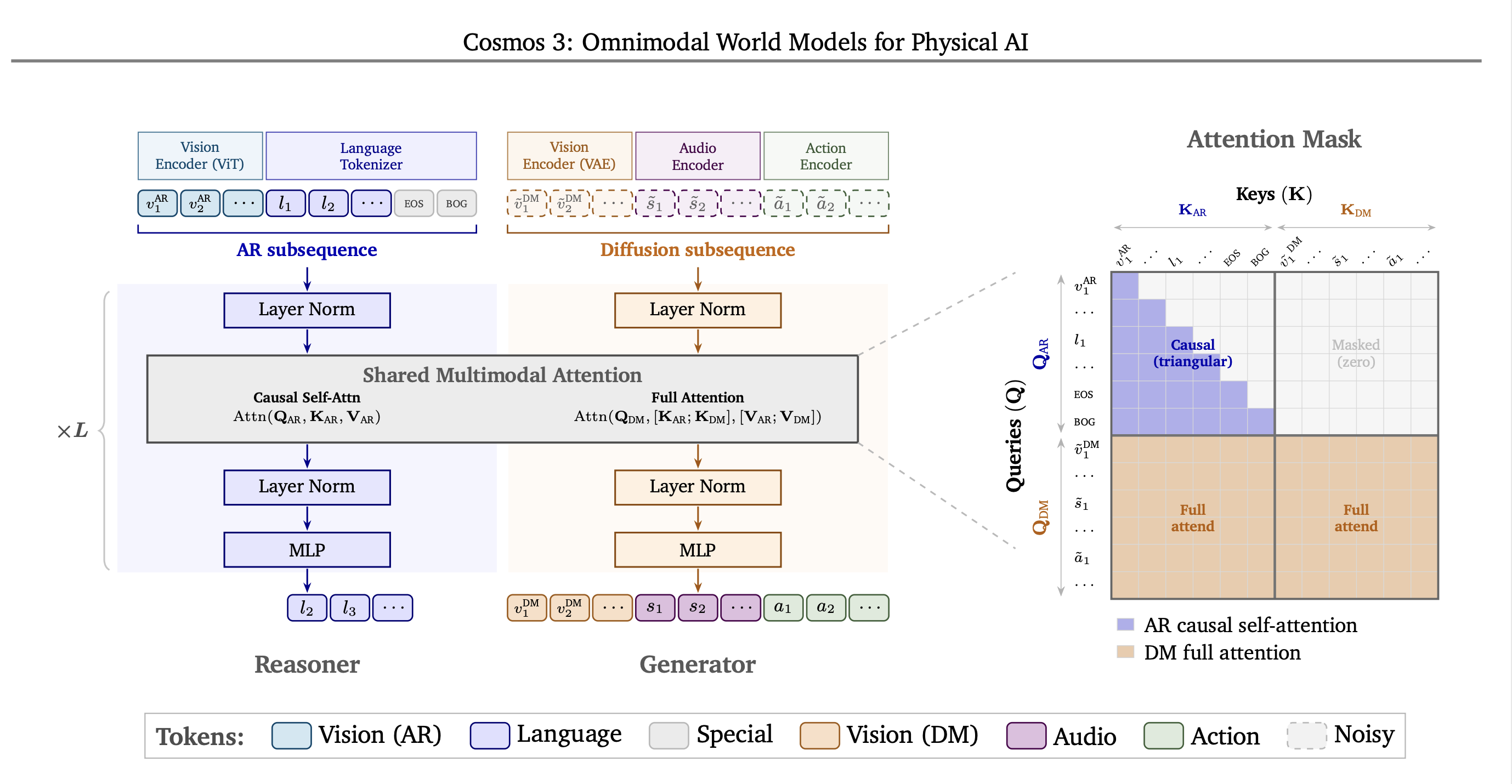
A Physical AI system, such as a robot or autonomous vehicle (AV) that translates real-world data into physical actions, can’t be built in a single training job. Instead, it takes a continuous pipeline: a loop of generating synthetic data, post-training perception and policy models, so the system understands its surroundings and can act, and evaluating

Build a Physical AI model factory with NVIDIA Cosmos 3 on SageMaker HyperPod Read More »

Run agent-driven Amazon SageMaker HyperPod operations with InstantStart

Run agent-driven Amazon SageMaker HyperPod operations with InstantStart

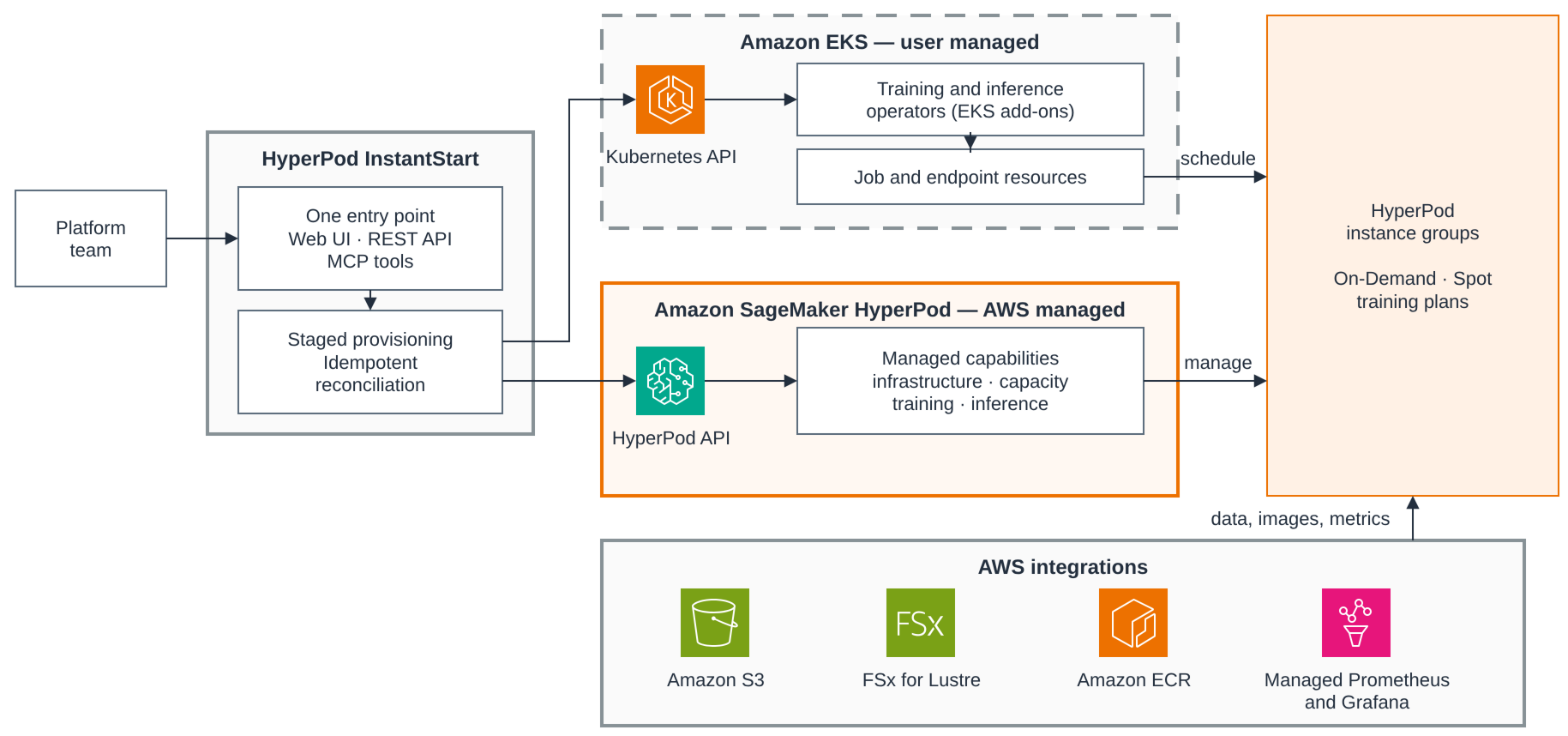
If you run foundation model (FM) workloads on Amazon SageMaker HyperPod, you know the work is rarely a single task. It is a chain of dependent ones. An infrastructure team creates the network and control plane, attaches accelerator capacity, and installs cluster dependencies in the right order. It also prepares storage and identity, keeps distributed

Run agent-driven Amazon SageMaker HyperPod operations with InstantStart Read More »

Scroll to Top