Blog

Embed Amazon Quick Suite chat agents in enterprise applications

Embed Amazon Quick Suite chat agents in enterprise applications

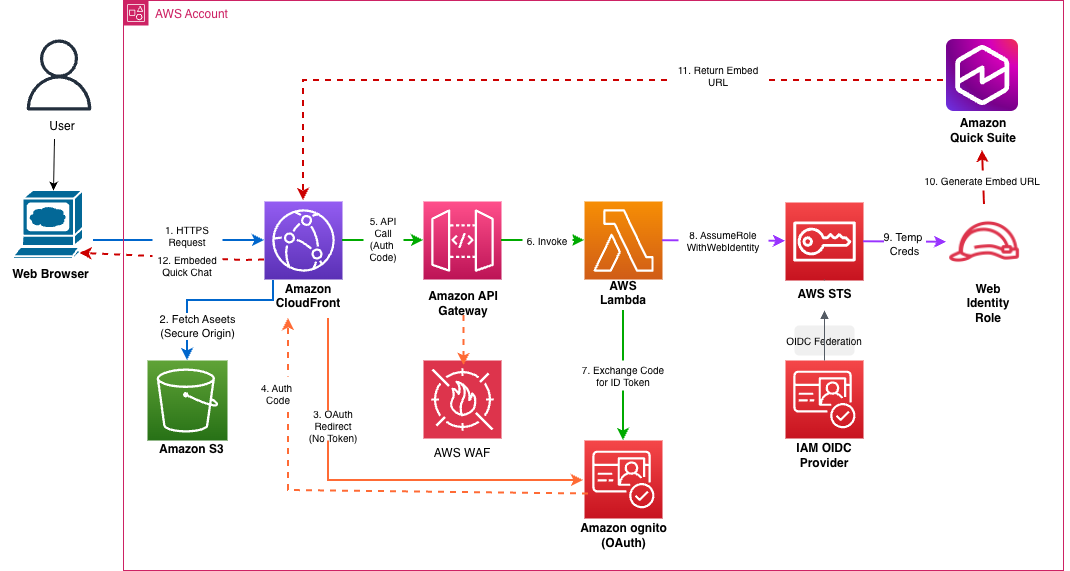
Organizations can face two critical challenges with conversational AI. First, users need answers where they work—in their CRM, support console, or analytics portal—not in separate tools. Second, implementing a secure embedded chat in their applications can require weeks of development to build authentication, token validation, domain security, and global distribution infrastructure. Amazon Quick Suite embedded …

Embed Amazon Quick Suite chat agents in enterprise applications Read More »
Unlock powerful call center analytics with Amazon Nova foundation models

Unlock powerful call center analytics with Amazon Nova foundation models

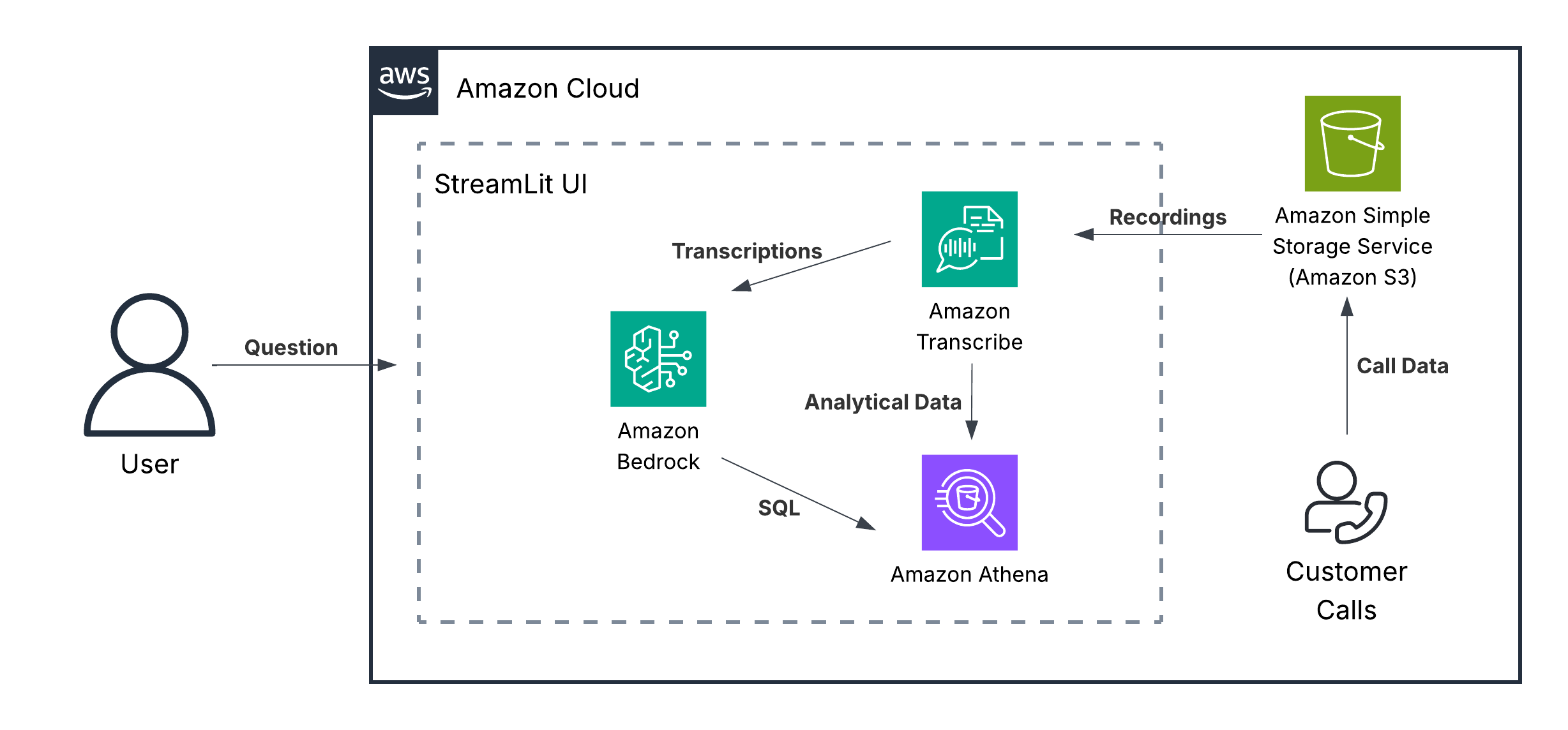
Call center analytics play a crucial role in improving customer experience and operational efficiency. With foundation models (FMs), you can improve the quality and efficiency of call center operations and analytics. Organizations can use generative AI to assist human customer support agents and managers of contact center teams, so they can gain insights that are …

Unlock powerful call center analytics with Amazon Nova foundation models Read More »

How Ricoh built a scalable intelligent document processing solution on AWS

How Ricoh built a scalable intelligent document processing solution on AWS

This post is cowritten by Jeremy Jacobson and Rado Fulek from Ricoh. This post demonstrates how enterprises can overcome document processing scaling limits by combining generative AI, serverless architecture, and standardized frameworks. Ricoh engineered a repeatable, reusable framework using the AWS GenAI Intelligent Document Processing (IDP) Accelerator. This framework reduced customer onboarding time from weeks …

How Ricoh built a scalable intelligent document processing solution on AWS Read More »

Building a scalable virtual try-on solution using Amazon Nova on AWS: part 1

Building a scalable virtual try-on solution using Amazon Nova on AWS: part 1

In this first post in a two-part series, we examine how retailers can implement a virtual try-on to improve customer experience. In part 2, we will further explore real-world applications and benefits of this innovative technology. Every fourth piece of clothing bought online is returned to the retailer, feeding into America’s $890 billion returns problem …

Building a scalable virtual try-on solution using Amazon Nova on AWS: part 1 Read More »

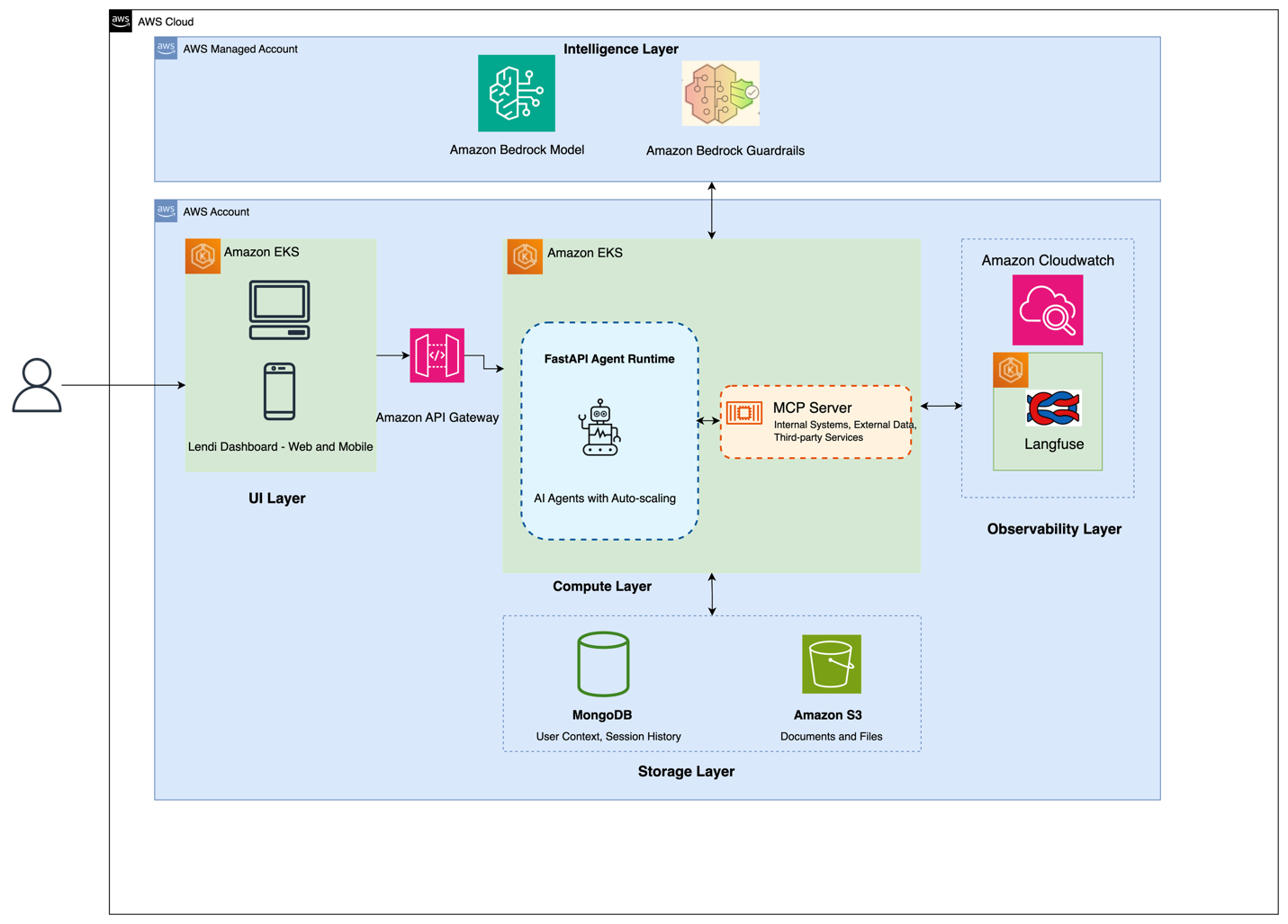
How Lendi revamped the refinance journey for its customers using agentic AI in 16 weeks using Amazon Bedrock

How Lendi revamped the refinance journey for its customers using agentic AI in 16 weeks using Amazon Bedrock

This post was co-written with Davesh Maheshwari from Lendi Group and Samuel Casey from Mantel Group. Most Australians don’t know whether their home loan is still competitive. Rates shift, property values move, personal circumstances change—yet for the average homeowner, staying informed of these changes is difficult. It’s often their largest financial commitment, but it’s also …

How Lendi revamped the refinance journey for its customers using agentic AI in 16 weeks using Amazon Bedrock Read More »

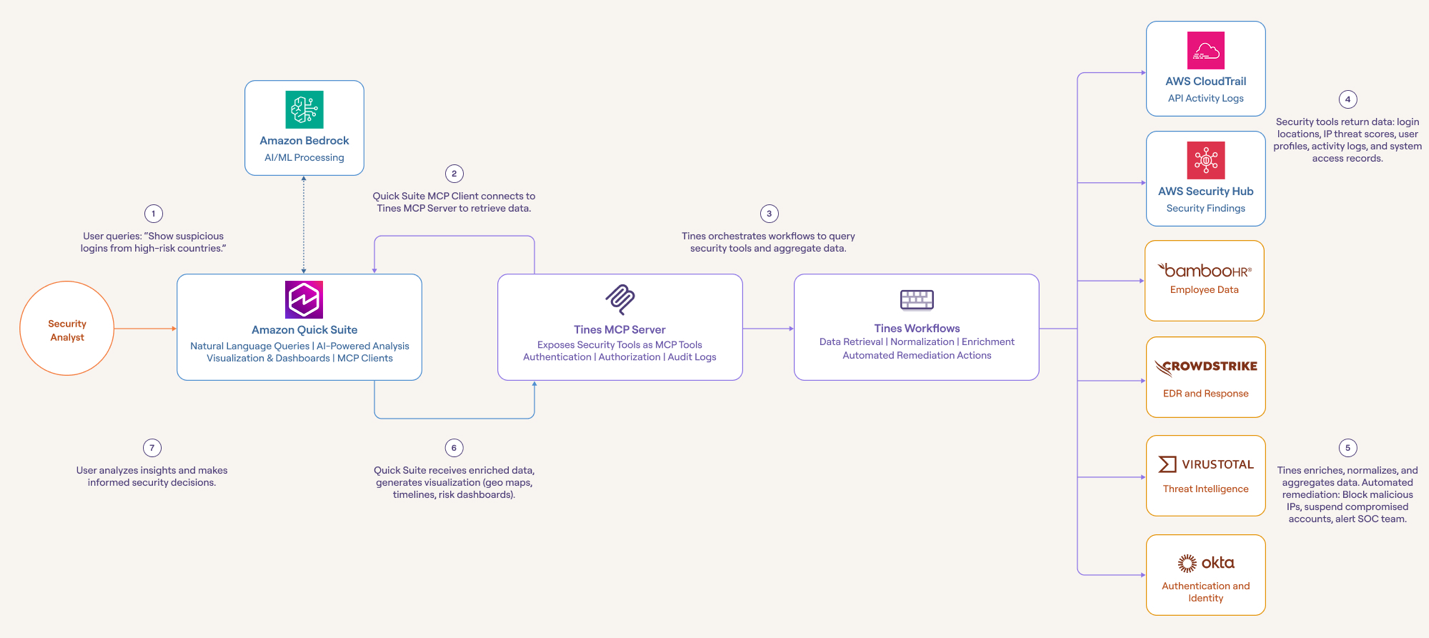
How Tines enhances security analysis with Amazon Quick Suite

How Tines enhances security analysis with Amazon Quick Suite

Organizations face challenges in quickly detecting and responding to user account security events, such as repeated login attempts from unusual locations. Although security data exists across multiple applications, manually correlating information and making corrective actions often delays effective response. With Amazon Quick Suite and Tines, you can automate the investigation and remediation process by integrating …

How Tines enhances security analysis with Amazon Quick Suite Read More »

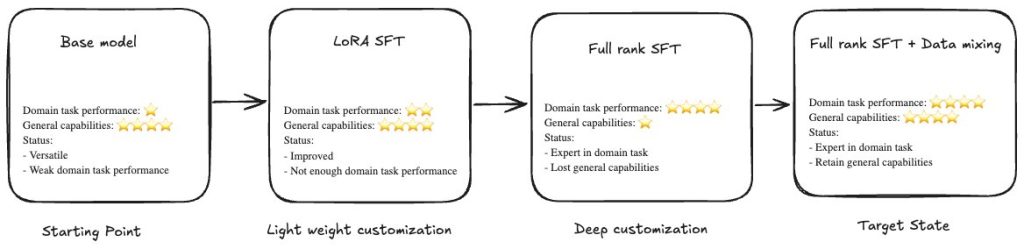
Building specialized AI without sacrificing intelligence: Nova Forge data mixing in action

Building specialized AI without sacrificing intelligence: Nova Forge data mixing in action

Large language models (LLMs) perform well on general tasks but struggle with specialized work that requires understanding proprietary data, internal processes, and industry-specific terminology. Supervised fine-tuning (SFT) adapts LLMs to these organizational contexts. SFT can be implemented through two distinct methodologies: Parameter-Efficient Fine-Tuning (PEFT), which updates only a subset of model parameters, offering faster training …

Building specialized AI without sacrificing intelligence: Nova Forge data mixing in action Read More »

Sign In

Register

Reset Password

Please enter your username or email address, you will receive a link to create a new password via email.

Scroll to Top