

Visit Rork website for full experience
Remarks
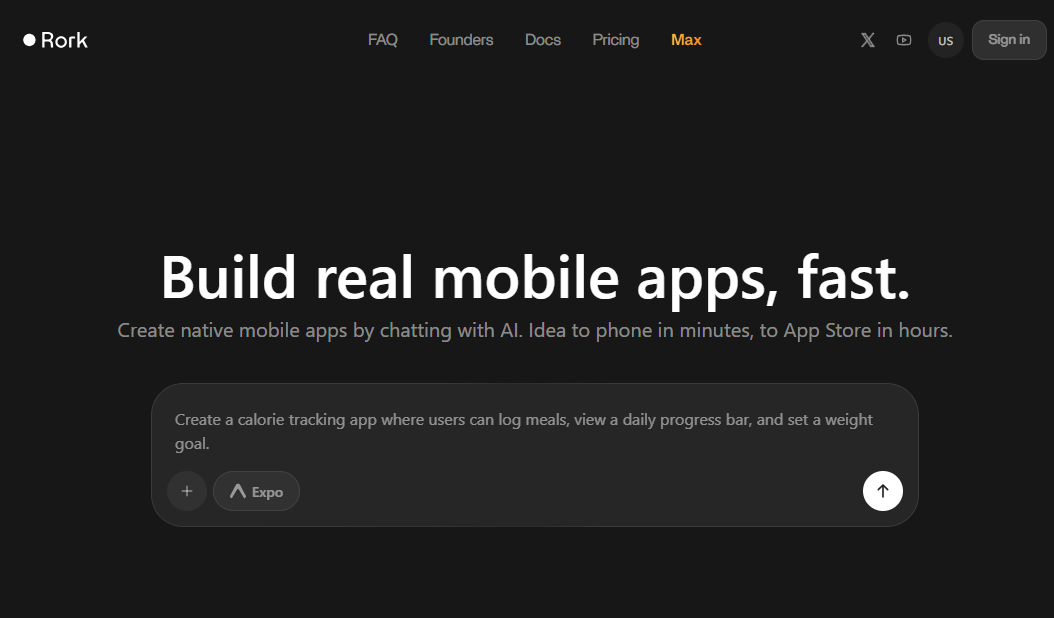
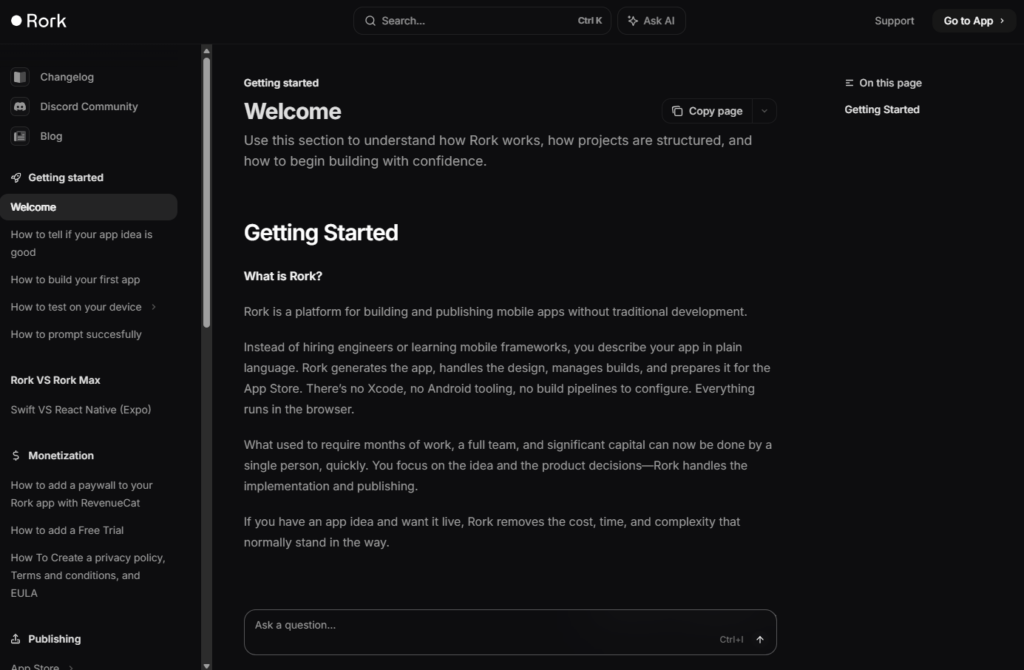
Rork AI is an AI-powered, no-code platform designed to let you build native mobile applications (iOS and Android) using plain English. It is part of the growing trend of “vibe coding” platforms, where you describe your app idea to an AI, and it handles the heavy lifting of building the structure, logic, and UI.
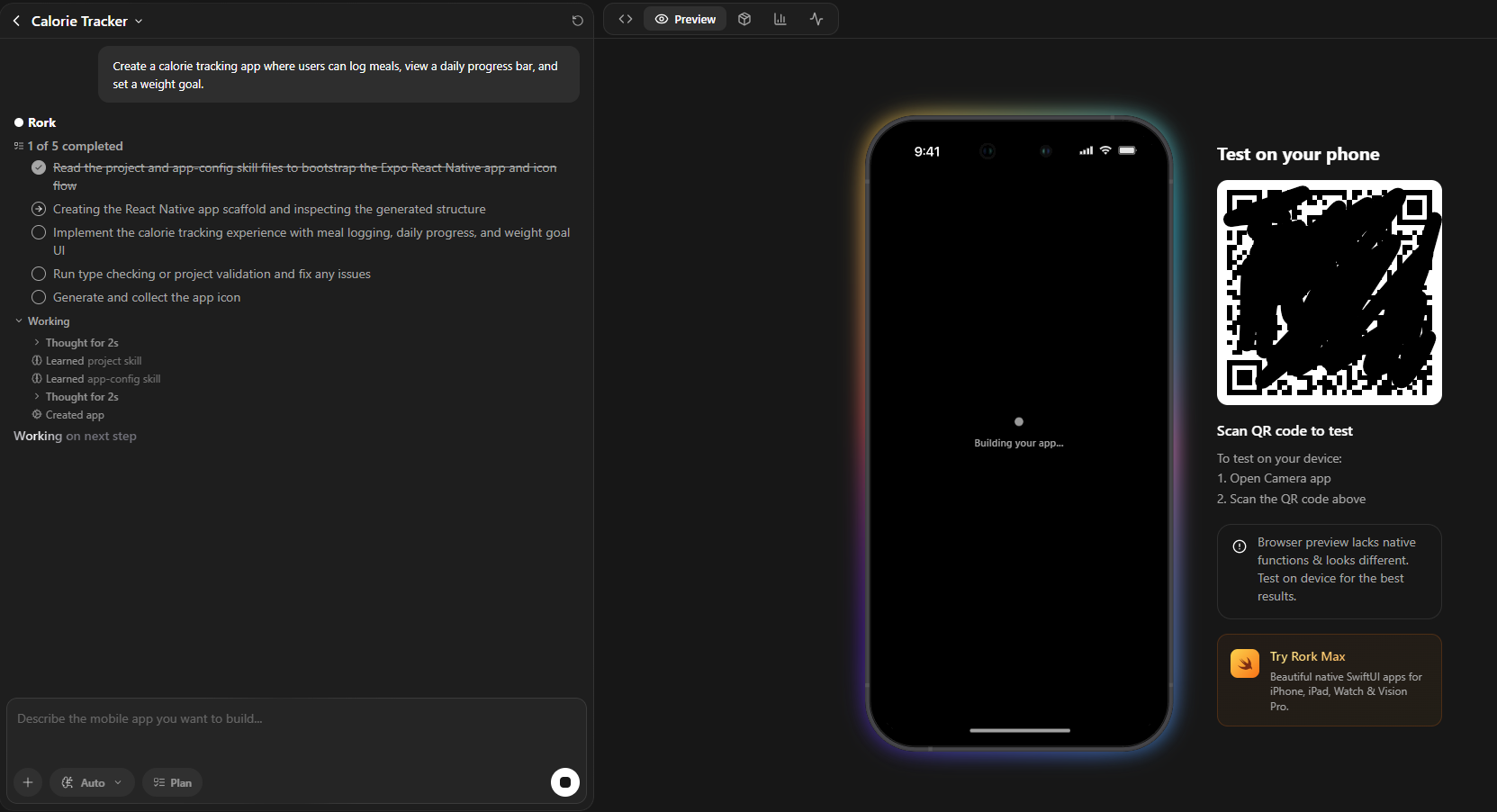
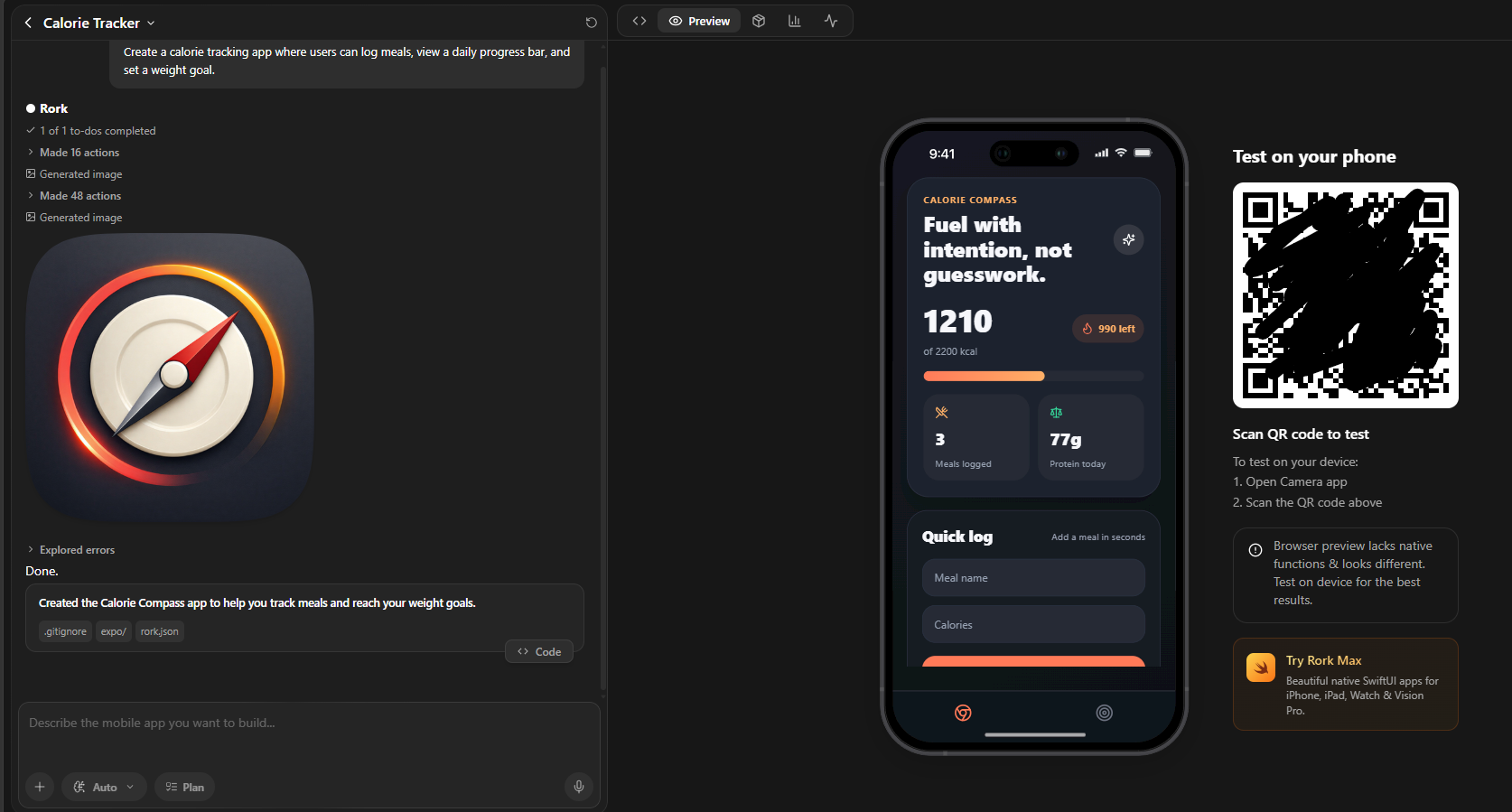
- Prompt-to-App: You describe your app idea (e.g., “A meditation app with a calm UI and daily reminders”), and Rork generates the screens, logic, and navigation.
- Native Capabilities: It supports hardware-specific features like NFC, HealthKit, AR/LiDAR scanning, Dynamic Island, and Home Screen widgets.
- No Mac/Xcode Needed: You can build and deploy iOS apps directly from your browser without owning a Mac or installing heavy development software.
- Backend Integration: It offers built-in support for Supabase (authentication), RevenueCat (in-app purchases), and its own serverless “Rork Backend.”
Limitation
- Credit-Based Model: Every change you request via chat consumes “messages” or “credits.” Inefficient prompting can burn through your monthly quota quickly.
- Logic Complexity: While great for MVPs and consumer apps, it can struggle with highly complex, data-heavy enterprise logic or very large-scale applications.
- No Drag-and-Drop: It is a “chat-first” builder. If you prefer a visual UI editor like Figma, you may find the iterative chat process slightly slower for fine-tuning layout.
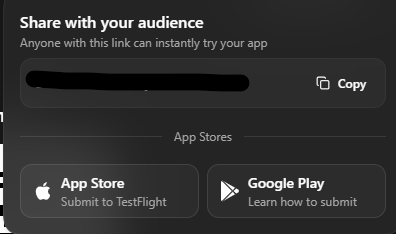
- Third-Party Fees: While Rork handles the code, you still need your own Apple Developer ($99/year) and Google Play ($25 one-time) accounts to actually list the app.
Visit Deepseek website for full experience
Remarks
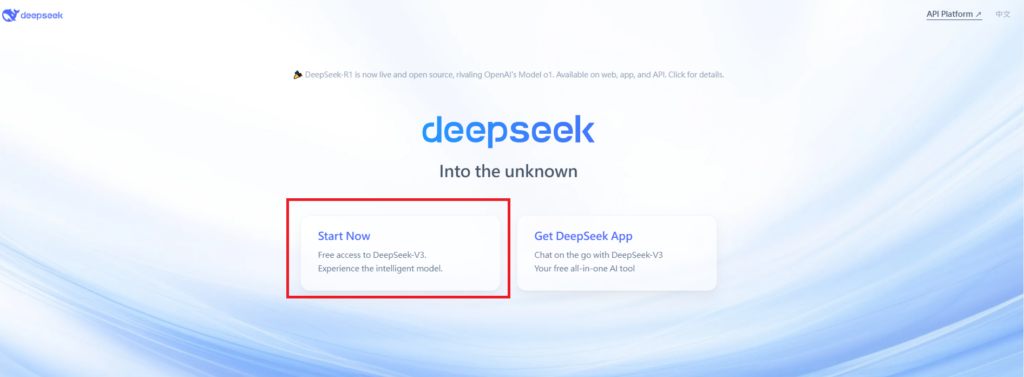
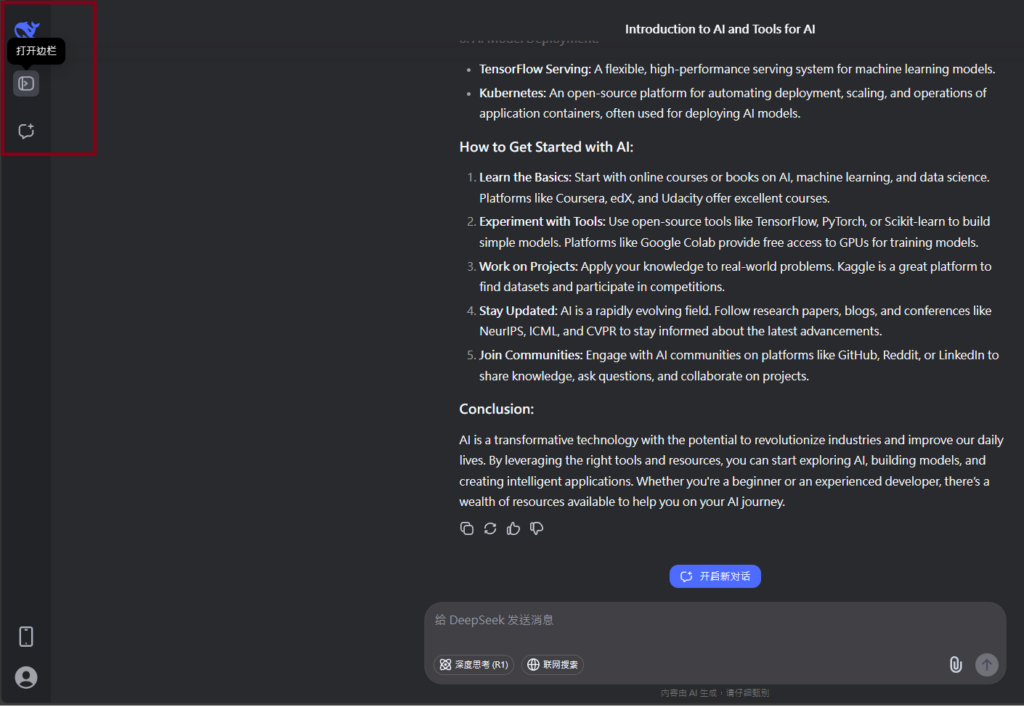
DeepSeek is an AI-powered tool designed for deep information retrieval, analysis, and content generation. It is commonly used in areas such as:
- Advanced Information Retrieval
- DeepSeek can process and analyze large datasets to extract relevant insights.
- It helps users find precise information beyond standard search engines.
- Natural Language Processing (NLP) Applications
- Used for text summarization, sentiment analysis, and question-answering systems.
- Supports various languages and can generate human-like responses.
- AI-Assisted Research and Writing
- Helps researchers analyze academic papers, generate summaries, and suggest references.
- Useful for drafting articles, reports, and creative writing.
- Code Assistance and Debugging
- Provides AI-powered code suggestions, optimizations, and bug fixes.
- Supports multiple programming languages, aiding developers in software development.
- Business and Decision-Making Support
- Analyzes market trends, customer feedback, and financial data for businesses.
- Assists in generating insights for strategic decision-making.
limitation:
- Accuracy and Hallucination Issues
- AI models can sometimes generate incorrect or misleading information.
- Requires human verification before relying on outputs.
- Limited Real-Time Data Access
- May not always provide the latest information if it’s not connected to live data sources.
- Some AI models work with pre-trained datasets, limiting real-time updates.
- Context Limitations
- Struggles with highly nuanced or ambiguous queries.
- Long conversations may lead to context loss or inconsistencies.
- Ethical and Bias Concerns
- AI models can reflect biases present in training data.
- Requires careful consideration when used in sensitive applications.
- Computational Resource Constraints
- Running deep learning models requires significant computational power.
- Latency issues may arise during complex queries or large-scale data analysis.


Lorem ipsum dolor sit amet, consectetur adipiscing elit. Ut elit tellus, luctus nec ullamcorper mattis, pulvinar dapibus leo.